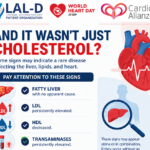
A new publication in Hepatology International provides important evidence about the role of lysosomal acid lipase (LAL) in liver disease progression.
The study shows that lower LAL activity is associated with:
👉 Increased liver inflammation
👉 Greater fibrosis progression
👉 Worse long-term disease outcomes
But beyond the data, the key message is clear:
💡 LAL is not only relevant in LAL‑D (Wolman, CESD)
💡 It is a central player in biological processes affecting millions of people
Importantly, LAL activity seems to capture disease mechanisms — especially inflammation — that current diagnostic tools do not fully reflect
This reinforces a fundamental idea for our community: rare diseases are not isolated
→ they are models that help us understand common conditions
👉 By studying LAL‑D, we are also advancing knowledge of widespread liver diseases.
Because when we understand the rare, we transform the common.
👉 Read the full study here — more evidence that LAL is not just a rare disease pathway, but a key player in common liver conditions: LINK – Role of LAL liver diseases
Lombardi, R., Cinque, F., Cespiati, A. et al. Low lysosomal acid lipase activity is associated with histological progression of metabolic dysfunction-associated steatotic liver disease. Hepatol Int (2026).
💙 Thank you for helping expand scientific knowledge and understanding