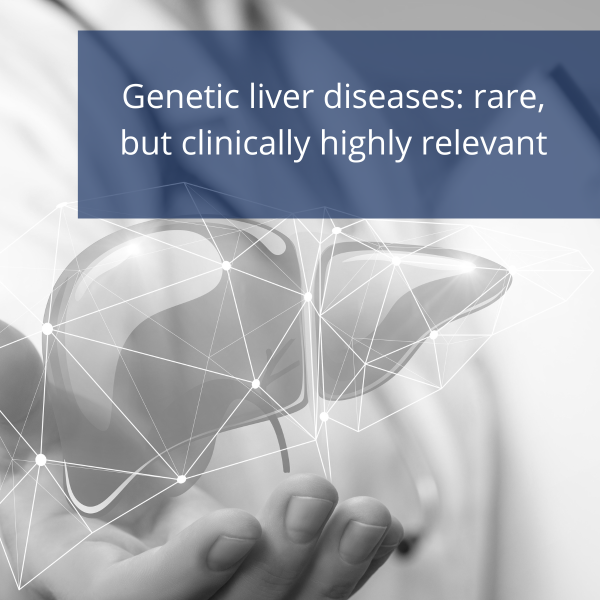
Genetic liver diseases: rare, but clinically highly relevant
This article highlights that genetic liver diseases, while individually uncommon, represent a significant and often underdiagnosed cause of chronic liver disease in adults. Detection is particularly challenging because these conditions frequently present with non‑specific features—such as fatigue, mild transaminase abnormalities, or extrahepatic manifestations—which are easily attributed to more common causes.
While the review focuses on classical conditions such as Wilson disease, hereditary haemochromatosis, and alpha‑1 antitrypsin deficiency, it also draws attention to other inherited metabolic disorders, including lysosomal acid lipase deficiency (LAL‑D). In adults, LAL‑D may present as unexplained liver disease, steatosis, dyslipidaemia, and progression to fibrosis or cirrhosis, often mimicking far more prevalent conditions such as MASLD.
A key message is the expanding role of genomic testing, which is increasingly uncovering these “hidden” diagnoses when conventional investigations fail to explain the clinical picture. In this evolving landscape, generalists and internal medicine physicians play a crucial role—raising suspicion of a genetic aetiology, initiating appropriate investigations, and ensuring timely referral.
Importantly, early identification of conditions such as LAL‑D can significantly alter patient outcomes and enables family cascade testing, with meaningful implications for long‑term management and prevention.
📖 Full article: https://pmc.ncbi.nlm.nih.gov/articles/PMC12719661/