The LAL-D community strengthens its commitment to early detection and scientific progress in a dual meeting held in Madrid
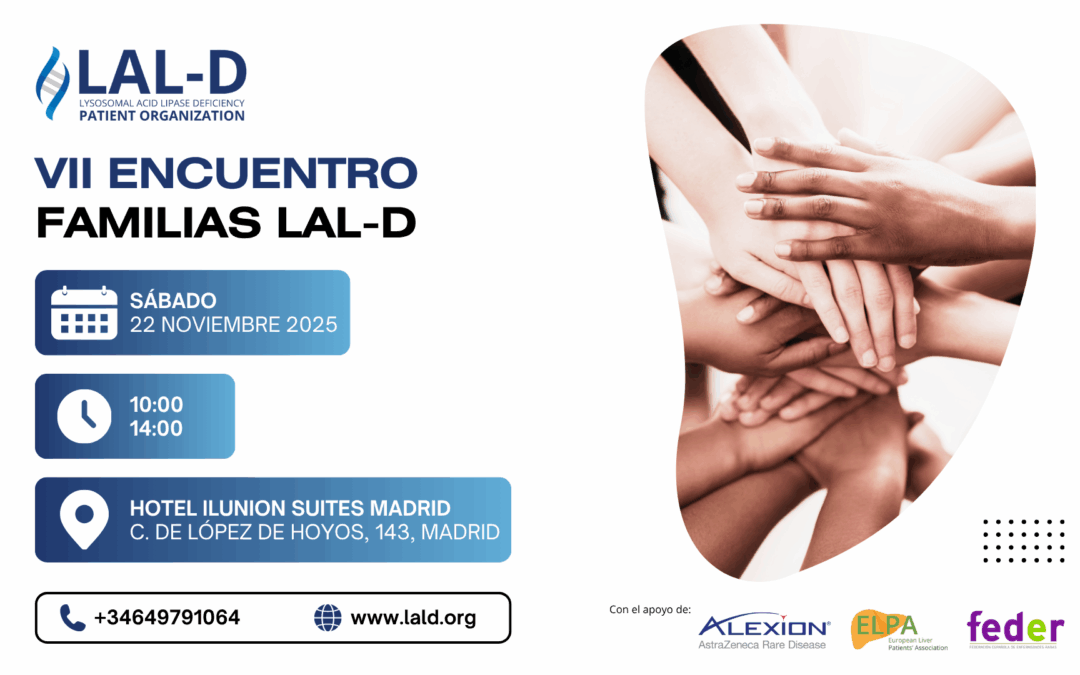
The city of Madrid hosted two key events for the Lysosomal Acid Lipase Deficiency (LAL-D) community on November 21 and 22, 2025: the Expert Committee Meeting and the VII LAL-D Family Meeting, organized by the LAL-D Patient Organization (LAL-D PO). Both events, held at the Ilunion Suites Madrid Hotel, brought together families, clinicians, researchers, and collaborators with a shared goal: to advance knowledge, visibility, and early detection of a rare disease that remains largely underdiagnosed.
These events were made possible thanks to the collaboration of Alexion AstraZeneca Rare Disease, the Spanish Federation of Rare Diseases (FEDER), and the European Liver Patients’ Association (ELPA), whose support allowed the creation of a space for both scientific training and human support—two equally important pillars for a small but deeply active community.
A rare disease that needs to be recognized
Lysosomal Acid Lipase Deficiency (LAL-D) is a genetic metabolic disorder that causes a disruption in the normal breakdown of lipids within lysosomes. Its clinical course can be highly variable: some patients present in childhood with severe and rapid symptoms, while others reach adolescence or adulthood without evident manifestations until liver or cardiovascular damage occurs, often irreversibly.
The infantile form, historically known as Wolman Disease, can have fatal consequences before the first year of life if appropriate care is not provided. This reality underscores the importance of pediatricians, hepatologists, gastroenterologists, and primary care professionals being aware of the disease in their daily practice.
Early detection not only allows timely intervention but also spares families years of diagnostic uncertainty, reduces medical complications, and significantly improves the future outlook for affected individuals.
In Spain, as in many other countries, the path to diagnosis remains a challenge. For this reason, LAL-D PO actively works toward earlier and more effective diagnosis, as well as promoting new strategies such as newborn screening.
Expert Committee Meeting: Advances, Evidence, and Shared Challenges
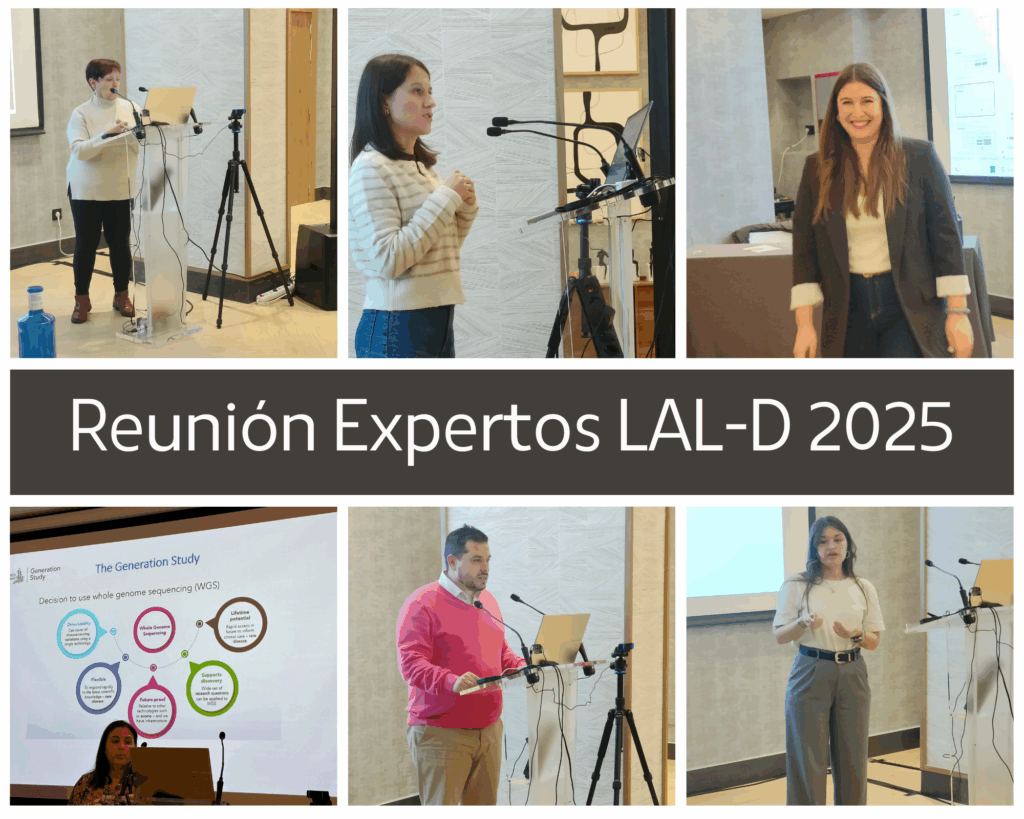
The scientific meeting on November 21 brought together specialists from various disciplines working in metabolism, genetics, biochemistry, and hepatology. Over more than four hours, emerging research lines, unpublished results, and clinical strategies with the potential to transform the future of LAL-D patients were presented.
The meeting was opened by Eduardo López, President of LAL-D PO, who emphasized the importance of advancing scientific knowledge alongside social support.
One of the most anticipated presentations was scheduled to be delivered by Dr. Jesús Quintero, focusing on the comparison of clinical outcomes between early and late diagnosis. Although Dr. Quintero had to excuse his attendance due to an unexpected change in his return trip to Barcelona, his contribution is key to understanding the impact of delayed treatment initiation on disease prognosis.
The session continued with a presentation by Sonia Roca, a researcher, who discussed advances in the search for fibrosis biomarkers—a field that could enable more precise and less invasive diagnosis and monitoring. Following her, Irene Serrano, a predoctoral researcher, shared the results of a large retrospective study of 2,494 subjects aimed at identifying predictive clinical and biological markers of LAL-D, an essential step for improving detection in real-world clinical practice.
The potential link between lysosomal acid lipase deficiency and certain neurodegenerative disorders was addressed by Sonia Roca and Dr. Pilar Giraldo, a researcher who also presented, together with other investigators, the progress of projects related to LAL-D.
Subsequently, Dr. Raquel Yahyaoui reviewed the current status of pilot genomic newborn screening projects worldwide and in Spain, a tool that could revolutionize the diagnosis of rare metabolic diseases, although its implementation in clinical practice still faces significant challenges. Finally, Dr. Jorge Cebolla presented a review on home administration of enzyme replacement therapies, a modality that improves the quality of life for many patients with rare diseases who depend on periodic intravenous treatments.
The session also provided a space for the academic training of new researchers. Ainhoa Guerrero, a patient and student, had the opportunity to present her Final Degree Project, titled “Evaluation of Recombinant Lysosomal Acid Lipase Role on Atherosclerosis Biomarkers of a LAL-D Patient,” to the expert committee. This presentation allowed her to share the findings of her work with specialists and highlight the direct contribution of patients to the scientific advancement of LAL-D.
The meeting concluded with a message shared by the experts: it is urgent to promote early diagnosis, advance toward newborn screening models, and strengthen training and clinical knowledge among healthcare professionals.
VII Family Meeting: Community, Knowledge, and Support
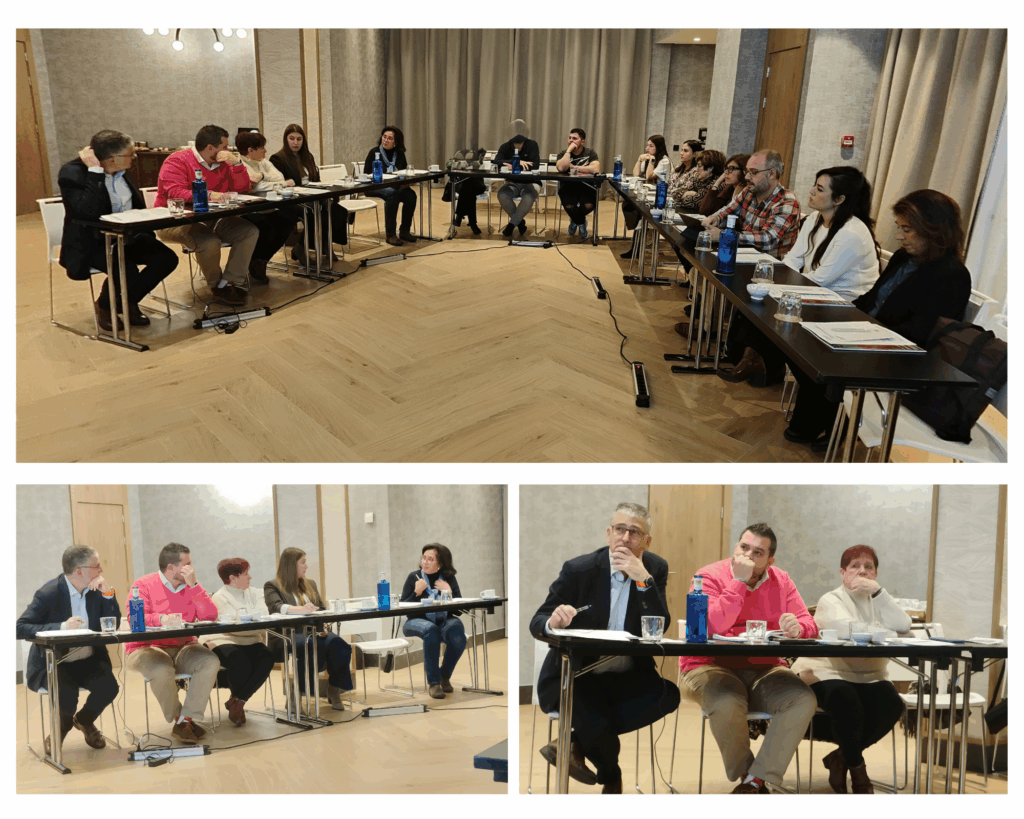
On November 22, the VII LAL-D Family Meeting took place, a profoundly valuable day for affected families, who found a safe space to learn, share, and support one another. Families from different parts of Spain gathered in Madrid, many of them also accompanied by professionals who have been part of their care journey.
The welcome was given by Eduardo López, who, in addition to reviewing the activities carried out by the association during 2025, presented the internationalization of LAL-D PO and the update of its website—a resource increasingly used by newly diagnosed families from Spain and other countries in Europe, South America, and beyond, seeking information and support about the disease.
Dr. Pilar Giraldo opened the scientific sessions with an update on ongoing research projects and the future patient registry, a key tool for promoting research on the disease.
Next, Cèlia Rodríguez-Borjabad, a nutritionist, and Maite Casado, Medical Advisor at Alexion, presented the new web app Lipid Control, designed to facilitate the nutritional and clinical monitoring of people with LAL-D. Later, Ylenia Caro Palomo, a management technician, shared the ÚNICAS project online, an initiative providing comprehensive support to families with rare diseases, promoted by the Ministry of Health and co-led by Catalonia and the Community of Madrid. Laura Gutiérrez, Patient Advocacy Director at Alexion, highlighted El Viaje de Nica, a project driven by Sant Joan de Déu and FEDER with the support of Alexion AstraZeneca Rare Disease, benefiting the ÚNICAS initiative.
The morning concluded with a highly interactive workshop on emotional well-being and group creativity, led by Yolanda Suesta, a psychologist, and Madelba Suesta, a collaborator in Social Work degree training. The workshop invited families to explore tools for coping with the disease through resilience and community cohesion. The learnings and outcomes of this workshop will be analyzed and shared later to strengthen support for the LAL-D community.
The meeting concluded with a shared meal at the hotel, where families continued exchanging experiences, questions, strategies, and insights. For many of them, these types of gatherings provide an invaluable emotional boost.
A Continuing Commitment: Message to Healthcare Authorities
At LAL-D PO, we want to emphasize that Lysosomal Acid Lipase Deficiency is a rare but detectable disease, and that each early diagnosis can completely change the clinical course of a child or adult. For this reason, we call on healthcare authorities to:
- Promote early identification protocols,
- Strengthen training on rare metabolic diseases,
- Support the implementation of newborn screening programs,
- And consolidate specific care pathways to prevent diagnostic delays.
The LAL-D community will continue working, together with professionals, partner entities, and organizations, to move toward a future where no one is diagnosed too late.
About LAL-D Patient Organization
LAL-D PO is composed of patients, family members, and individuals committed to Lysosomal Acid Lipase Deficiency. The organization works to provide support, guidance, and meeting spaces; promote the dissemination of accurate information among families and professionals; advance scientific research; and raise awareness among society and healthcare institutions about the reality of the disease and the importance of early diagnosis.
Furthermore, in 2025, LAL-D PO (formerly AELALD) has taken a further step by establishing itself as an international organization. Families from various countries in Europe, South America, and beyond reach out to us seeking information, support, and guidance, reflecting the growing need to create a global network that connects people affected by LAL-D, shares experiences, and promotes scientific knowledge worldwide.
LAL-D Patient Organization