New International LAL-D Registry Study Shows Sustained Improvements in Lipid Profiles with Sebelipase Alfa Treatment
A new study published in Atherosclerosis provides important long-term evidence on the impact of sebelipase alfa enzyme replacement therapy in people living with Lysosomal Acid Lipase Deficiency (LAL-D).
The analysis included data from 144 pediatric and adult patients enrolled in the International LAL-D Registry with a confirmed diagnosis of LAL-D. Researchers evaluated lipid profile outcomes in patients treated with sebelipase alfa who were not receiving additional lipid-lowering medications.
Key findings
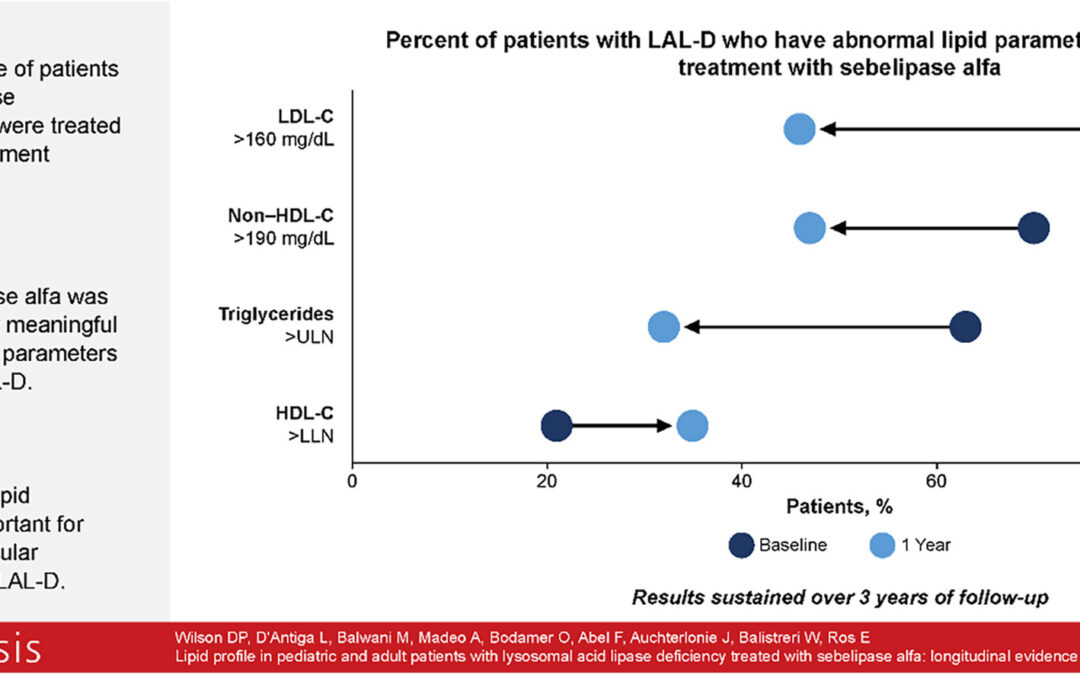
After one year of treatment, significant improvements were observed in several cardiovascular risk markers:
- The proportion of patients with LDL cholesterol levels above 160 mg/dL decreased from 78% to 46%.
- The proportion of patients with elevated triglycerides decreased from 63% to 32%.
- The proportion of patients with normal HDL cholesterol levels increased from 21% to 35%.
Importantly, these improvements were maintained throughout three years of follow-up.
Why does this matter?
Dyslipidemia is a common feature of LAL-D and may often be mistaken for more common conditions, such as familial hypercholesterolemia. This can contribute to delayed diagnosis and appropriate treatment.
The findings reinforce the value of enzyme replacement therapy in addressing the underlying disease mechanism and highlight the importance of considering LAL-D in the differential diagnosis of patients presenting with severe dyslipidemia and liver involvement.
At LAL-D Patient Organization, we welcome research that advances understanding of LAL-D and supports earlier diagnosis, improved disease management, and better outcomes for affected individuals and their families.
Reference
Wilson DP, D’Antiga L, Balwani M, et al. Lipid profile in pediatric and adult patients with lysosomal acid lipase deficiency treated with sebelipase alfa: longitudinal evidence from the International LAL-D Registry. Atherosclerosis. 2026. DOI: 10.1016/j.atherosclerosis.2026.121867